Chronotopic Cartographies
Rime of the Ancyent Marinere
For 'The Rime of the Ancyent Marinere' three different versions of the text were coded and mapped: the poem as first published in Wordsworth and Coleridge’s collection Lyrical Ballads of 1798; in the second edition of 1800; and in its 1817 version published by Coleridge in Sibylline Leaves. The power of the chronotopic model for understanding poetic place and space is here revealed comparatively. Whilst there are relatively minor textual changes between 1798 and 1800 there is a separate 'Argument' at the front of the poem which creates its own separate mini-chronotope and anticipates the way that, in 1817, Coleridge adds a 'gloss' to the entire poem. This creates a separate paratextual space of its own alongside the base text.
1798 Map of “The Rime of the Ancyent Marinere”
This map generated out of the coded text of 'The Rime of the Ancyent Marinere' is for the first edition text. This version of the text is the most consciously archaic with old-fashioned spelling (as seen in the title) and choice of vocabulary for the ballad form. The poem was placed as the opening poem of the 1798 collection of Lyrical Ballads.
1800 Map
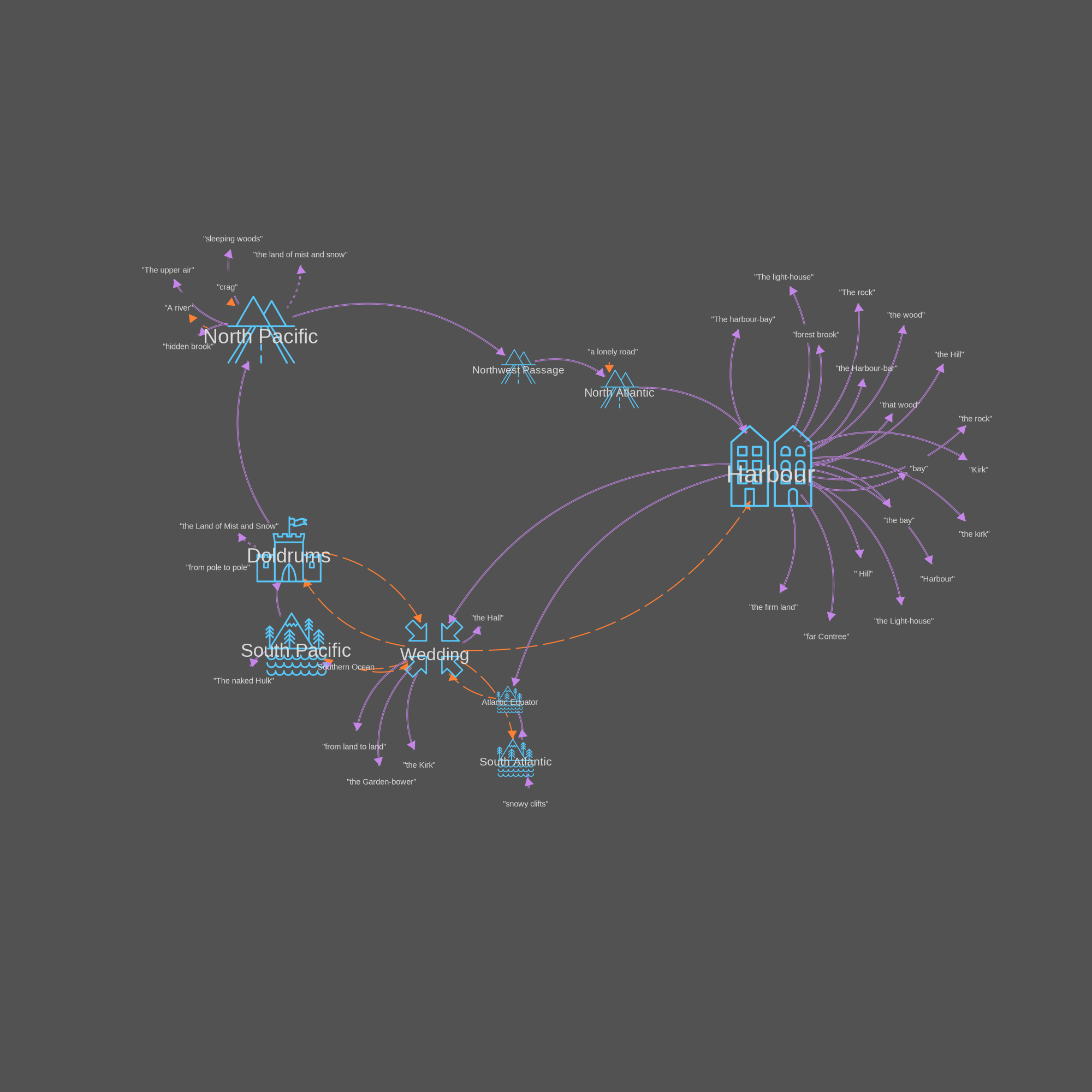
When the first edition of Lyrical Ballads was published, Coleridge’s opening poem was widely criticised as being unintelligible. As a result, it was moved from the front to the back of the first volume for the second edition. Coleridge immediately responded to criticism by modernising some of the spelling and by adding an 'Argument' at the front that reads as a summary and clarification of the plot: 'How a Ship, having first sailed to the Equator, was driven by Storms, to the cold Country towards the South Pole; how the Ancient Mariner cruelly, and in contempt of the laws of hospitality, killed a Sea-bird; and how he was followed by many and strange Judgements; and in what manner he came back to his own Country.' Spatially and temporally the 'Argument' exists as a little world of its own ahead of the main poem (shown next to the 'wedding' topos in this visualisation).
1817 Map with Gloss
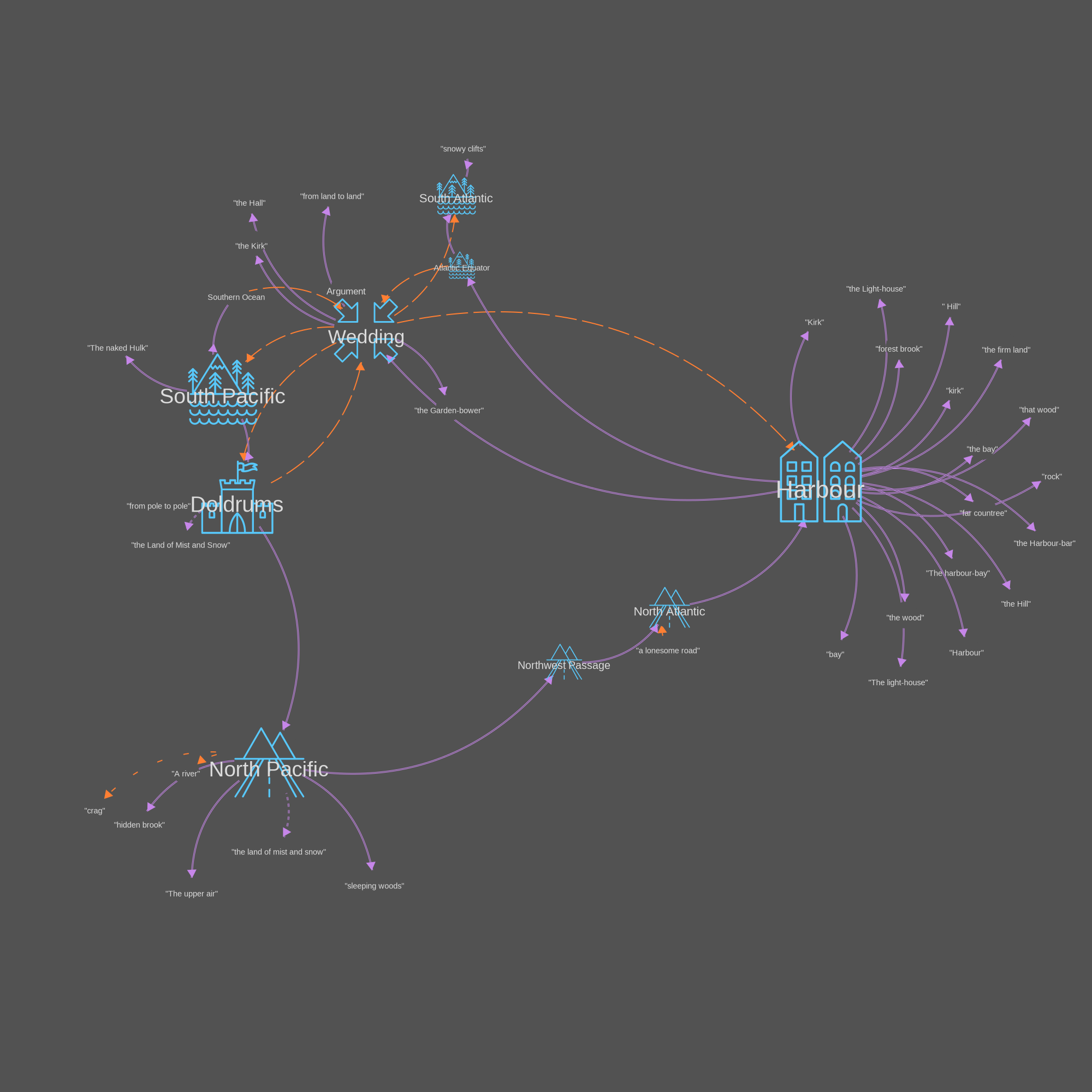
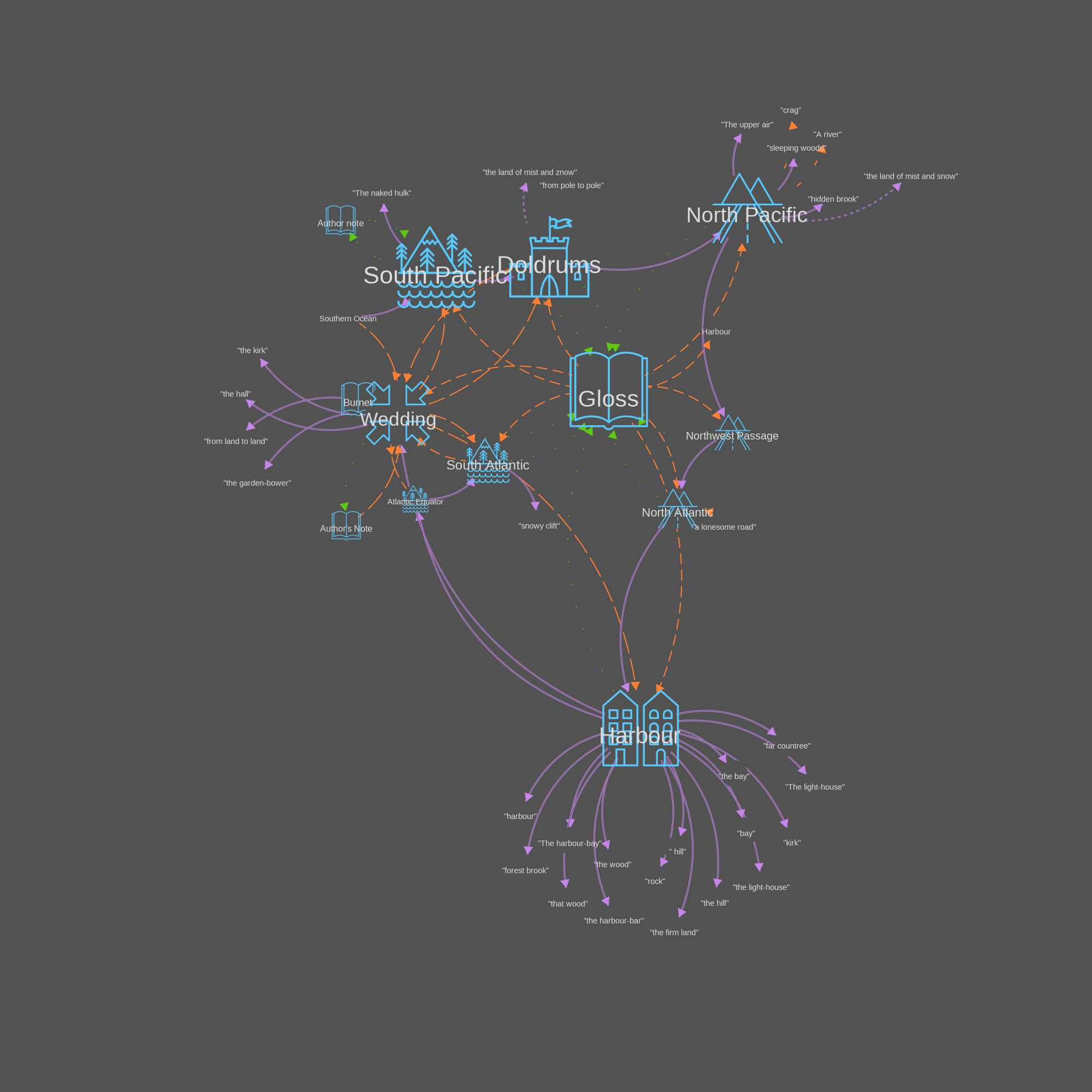
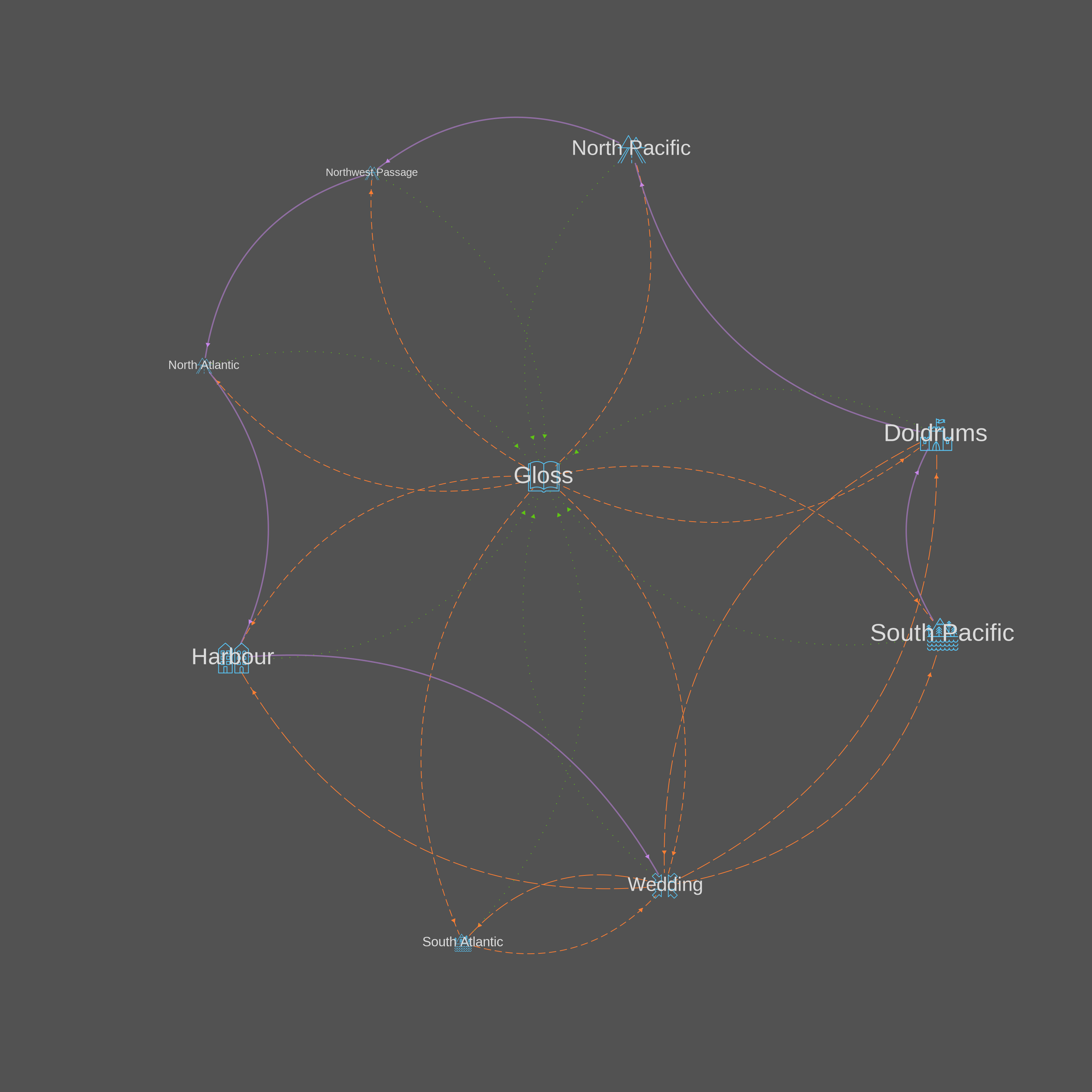
In 1817 Coleridge finally published the poem himself in his own collection but now with an extended gloss that sought to 'explain' and interpret the base text alongside it, largely offering a Christian allegorical reading of events and outcomes. (The earlier 'Argument' anticipates this gloss which is far more extensive). When we spatialise the poem and visualise it in graph form the gloss appears as a separate paratext with its own internal chronotopic values. The gloss problematises how we respond to the space of the text as we read since there are in effect two different versions (prose/poetry) now alongside each other.
When the gloss is mapped onto the spaces of the text we can see – as we would expect – that it mirrors the Syuzhet map for the telling of the tale. The Gloss functions as a further hub that connects all the places to which the Mariner travels but does so more succinctly and explicitly than the poem to which it corresponds. E.g. 'The Mariner tells how the ship sailed southward with a good wind and fair weather, till it reached the line'.
1817: Fabula & Syuzhet
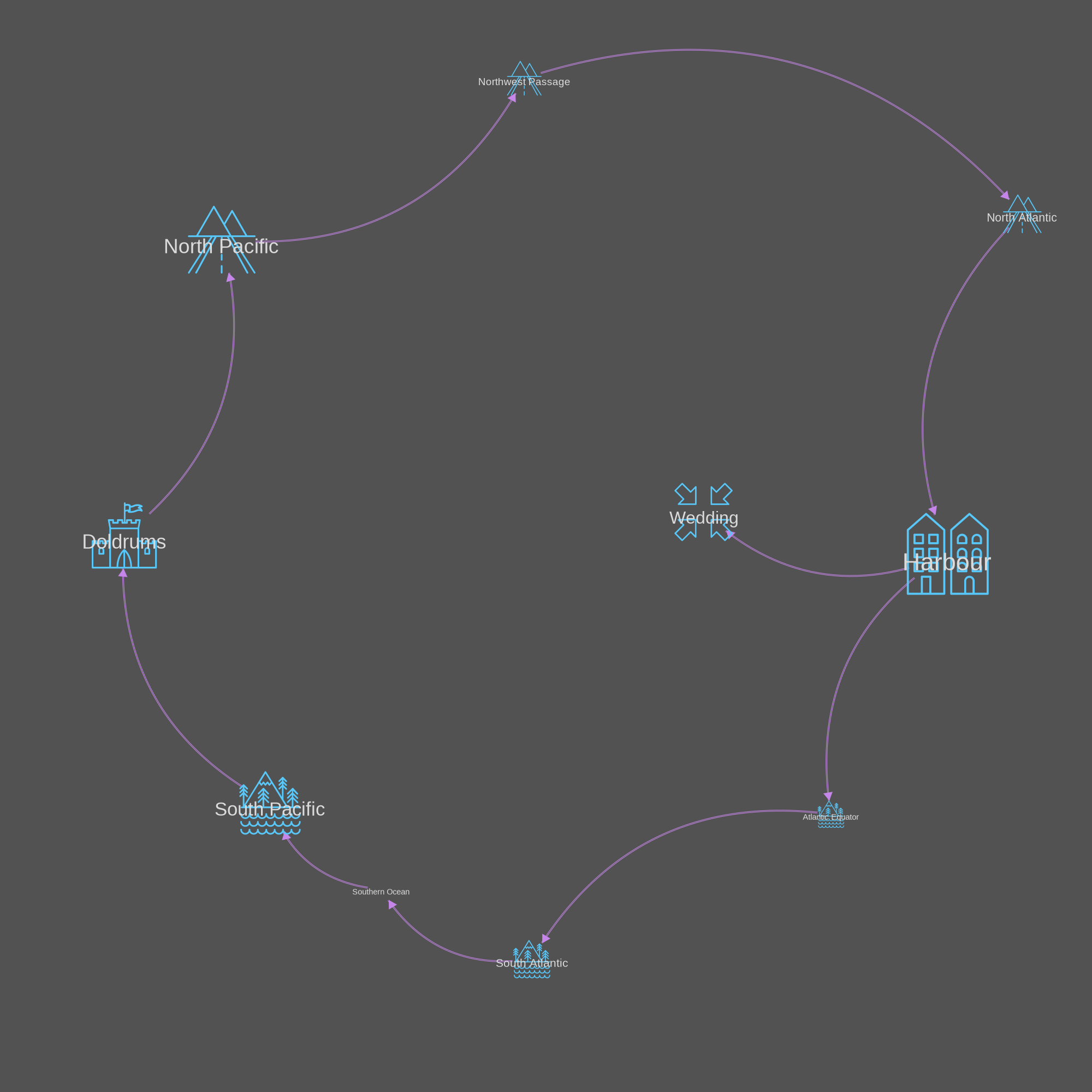
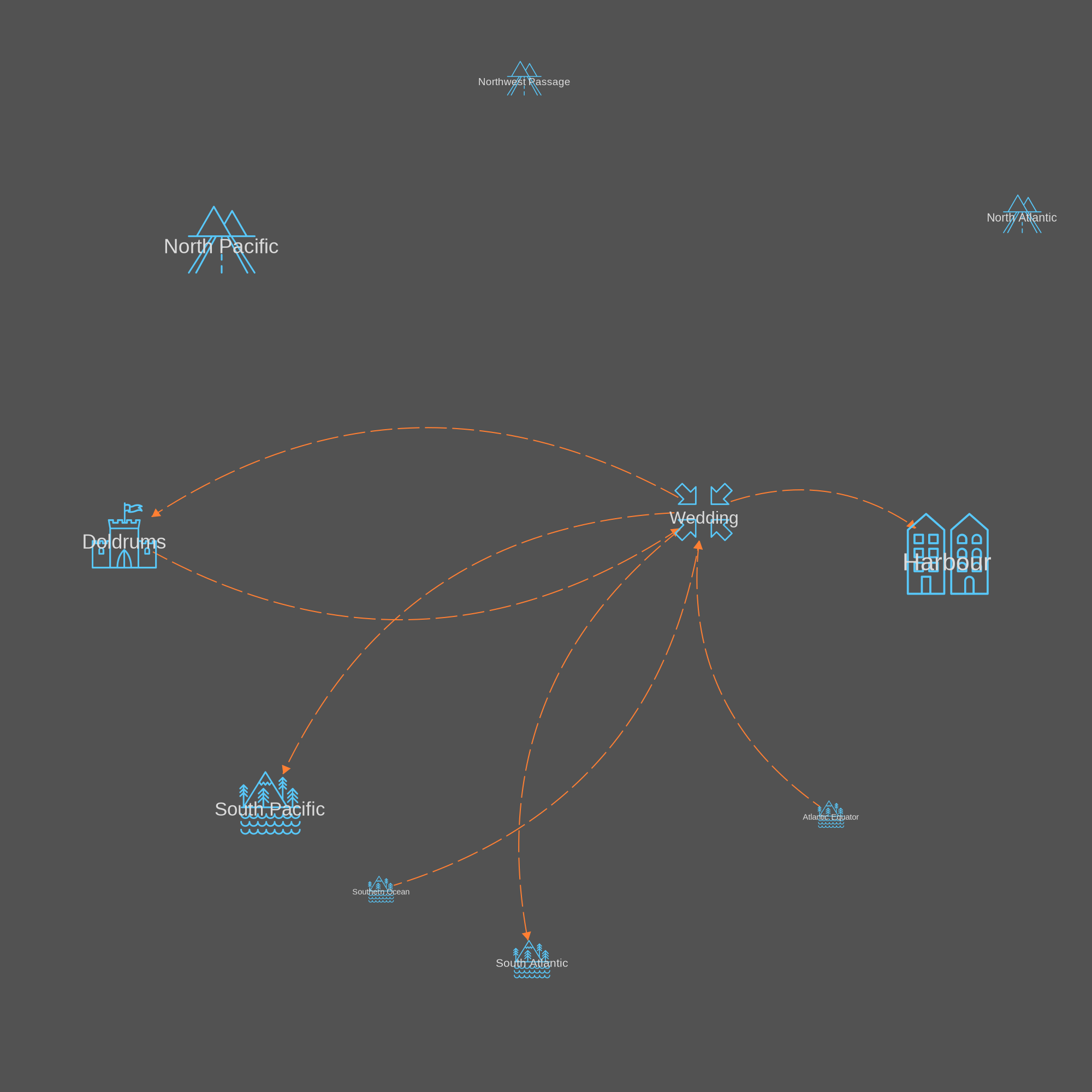
The maps displayed here show the contrast between mapping the supposed route of the mariner’s journey (the fabula map for the chronological order of the story) as opposed to the telling of his tale (the syuzhet map). The terms 'fabula' and 'syuzhet' are standard terms for this distinction in narratology, first used by Russian folklorist, Vladimir Propp, in Morphology of the Folktale (trans. Laurence Scott, second edition revised [University of Texas Press, Austin, 1968]).