Chronotopic Cartographies
Utopia
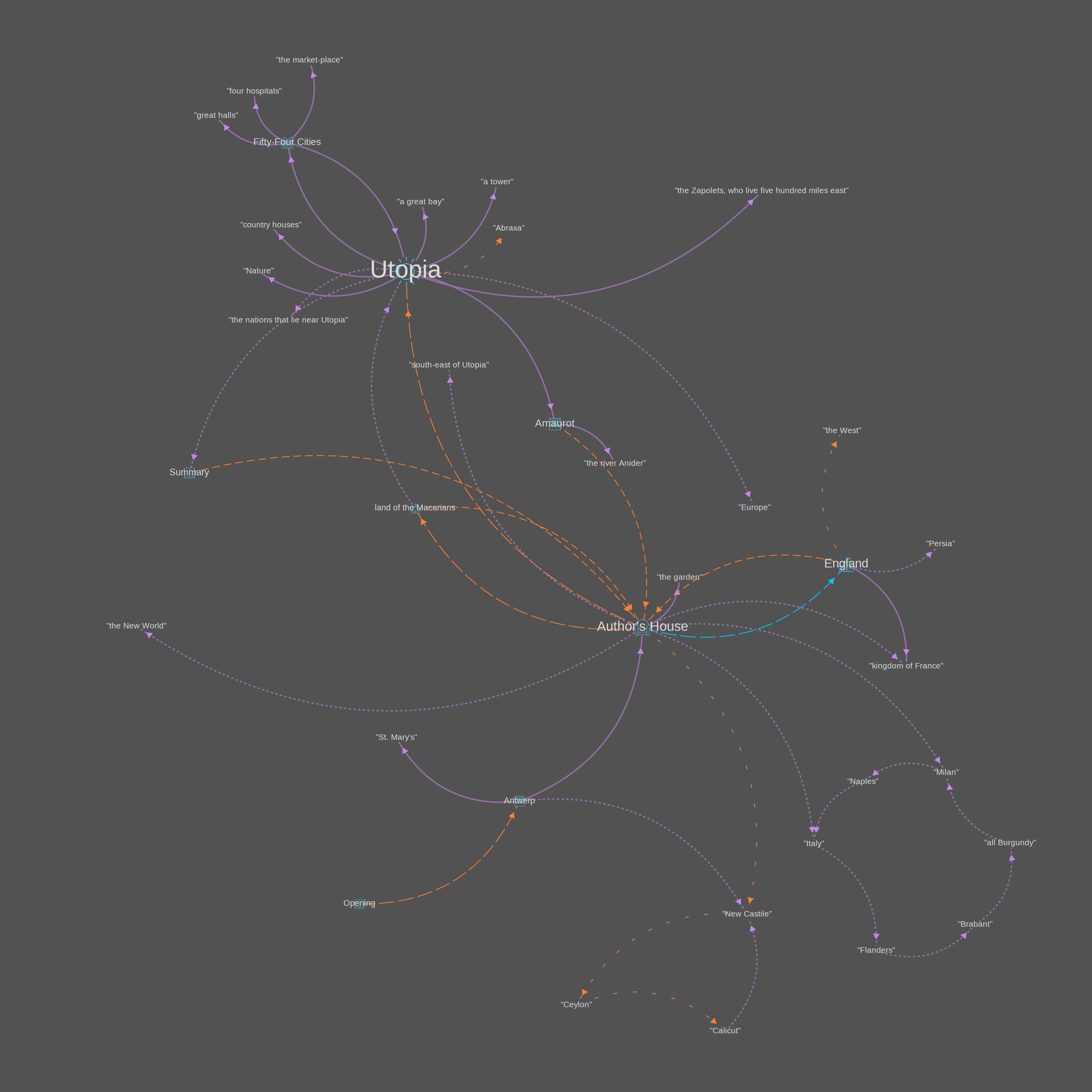
Sir Thomas More’s Utopia (1516) is a key text for any form of literary mapping as it represents an extremely early example of a literary work that also presents a corresponding map. In the published editions that map is of the island alone, not of the Utopian place located in relation to the realist base world. Rather, More presented the map as part of a meta-structure of documentation designed to blur the boundaries between real world exploration to the New World and his imagined, ideal state. This was so successful that many readers voiced the desire for such a map so that they could go and visit Utopia for themselves. The maps generated here from the graph topologies by comparison do show the relative spaces of the 'real' – 'England' / 'France' / 'Author’s House' – in relation to the imaginary island.
Complete Map
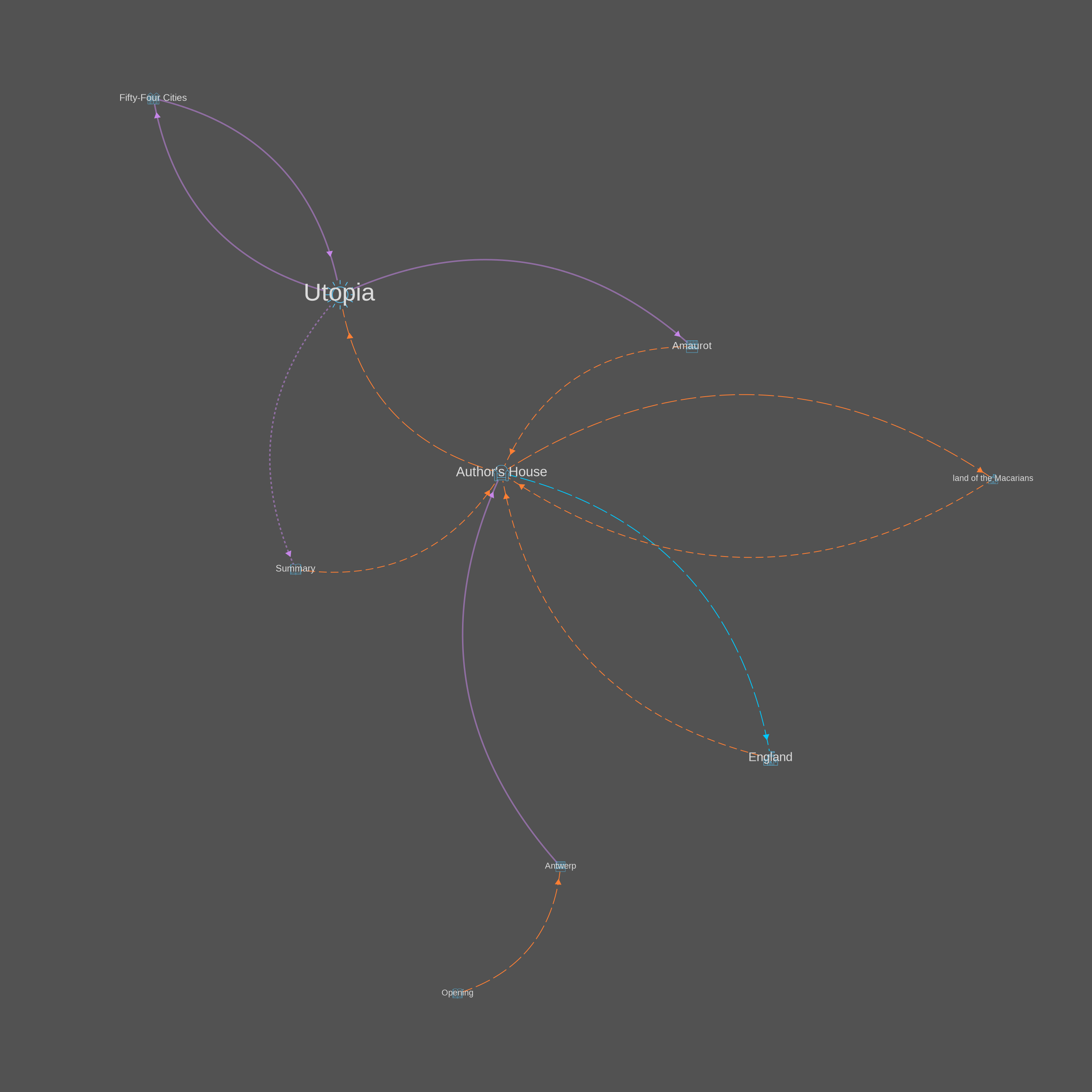
The core topology of the complete map is identical to that of the syuzhet visualisation as a result of the recollective story-within-a-story form employed by More. The Author's House (in Antwerp) stands at the centre of the map, establishing the context and providing believable 'credentials' for the narrative of discovery of the island by the world voyager Raphael Hythloday.
Topoi and Chronotopic Archteypes
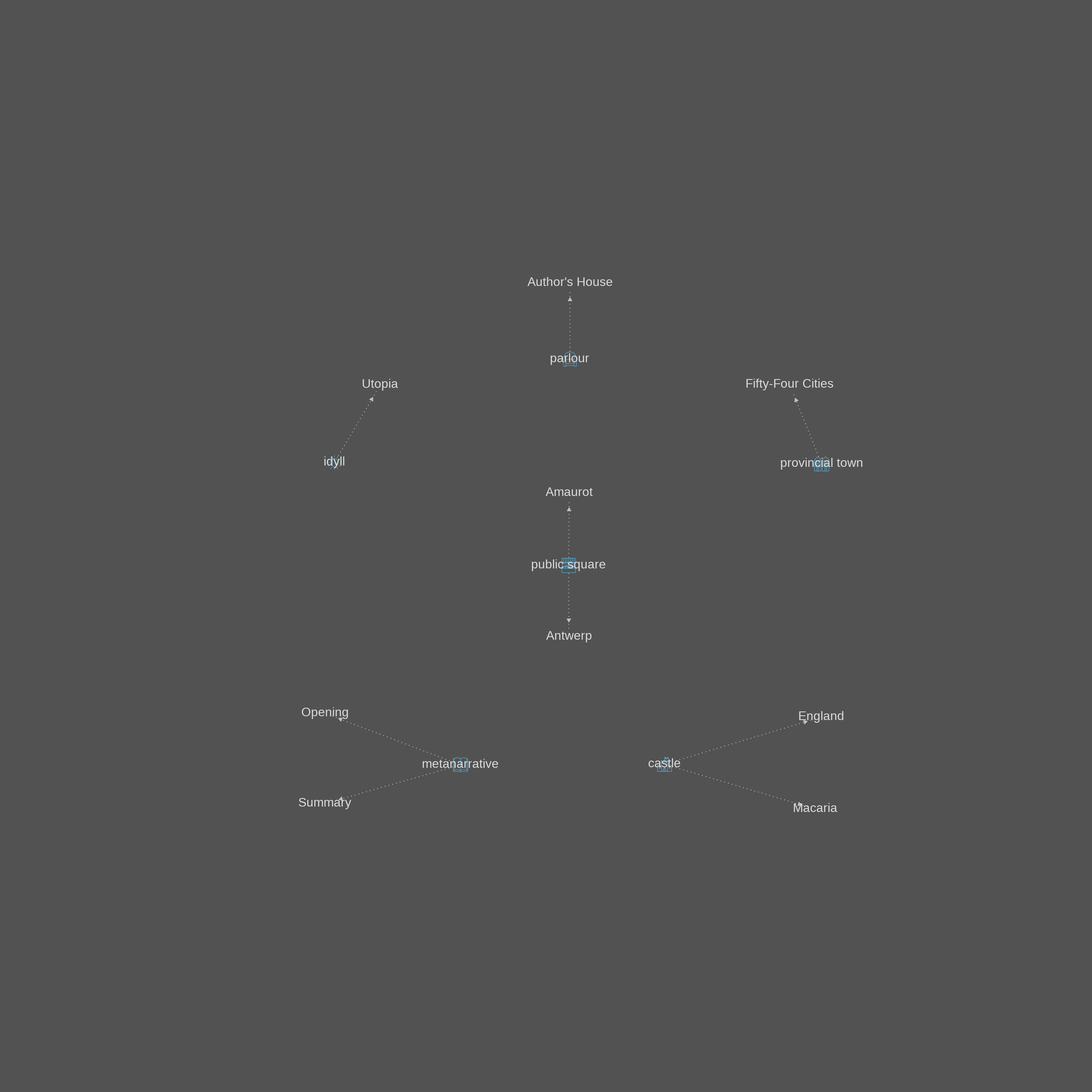
The fragmented topology of the topoi and chronotopic archetypes map shows how strongly each separate place retains a singular chronotopic identity. So Utopia is always an 'idyll'; England always a 'castle'. At the centre the two locations of 'Antwerp' in the realist base narrative and 'Amaurot' as the capital city of Utopia mirror each other as chronotopes conforming to the space of the public square. Just as with the deep chronotope map, the visualisation process generates these stand-alone chronotopic forms in a manner that creates a symmetrical layout which is entirely in-keeping with the design and expressive ideological intent of Utopian society.
Deep Chronotopes and Topoi and Chronotopic Archetypes Maps
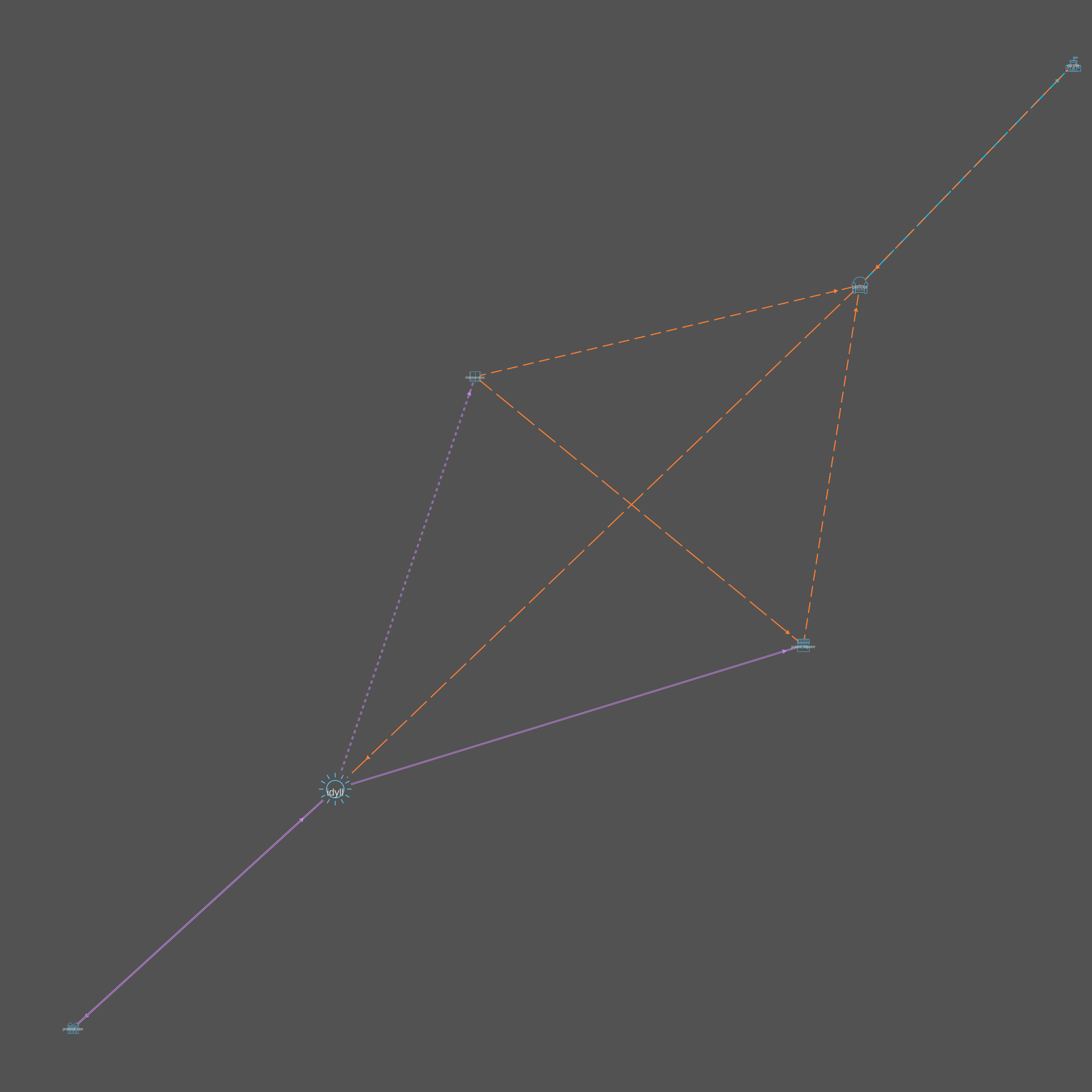
The deep chronotopes map for Utopia is highly distinctive in forming a clear 'kite' formation between the four chronotopic spaces of: 'idyll', 'metanarrative'; 'parlour' and 'public square'. The purple and orange lines also show the ways in which the two main locations of the text – the author’s house and the island world of Utopia – are linked and balanced in a highly symmetrical way that reinforces More’s use of the spaces satirically to play off the reality of life against a supposed ideal. The 'parlour' and 'idyll' forms provide the key chronotopic sites for narrative connection through description of an unknown distant land by the traveller after he has returned to the world. If we compare the deep chronotope map of the underlying chronotopic spaces with the 'topoi' map we can see even more clearly how the two spaces of 'idyll' and 'parlour' dominate and ground the place of telling and the place retold.